What Is Venice Famous For?
Venice, the “Floating City”, is one of the most unique urban environments on Earth. Because it is building on a cluster of 118 small islands linked by over 400 bridges, visiting requires a bit more mental preparation than your average city break.
The canals: The Grand Canal is the city’s main “highway”, lined with Renaissance and Gothic palaces. Instead of cars, you have seen vaporetti (water buses), water taxis, and the iconic gondolas.
St Mark’s Square (Piazza San marco): Napoleon allegedly called it “the drawing room of Europe”. It houses St Mark’s Basilica, famous for its opulent gold mosaics, and the Doge’s Palace, the former seat of Venetian power.
St Mark’s Square and Iconic Landmarks
Venice’s ceremonial centre, St Mark’s Square, is popularly known as “the Drawing Room of Europe” and has St Mark’s Basilica at its centre. The basilica is a piece of art within the context of Italy’s Byzantine architecture and has more than 8000 square metres of gold, making it very bright.
The Doge’s Palace, located next to the basilica, is a beautiful pink and white Gothic architectural work that served as the headquarters of the Venetian government. The Bridge of Sighs is located in the corner of St Mark’s Square and is an eerie connection between the palaces and the historical prison. One can see the best view of Venice from the top of the Campanile; however, the Torre dell’Orologio has been telling time and telling the zodiac sign since the 15th century.

Artistic Heritage: Venice was a powerhouse of the Renaissance. It is the birthplace of Vivaldi and home to masterpieces by Tintoretto, Titian, and Canaletto.
Venetian Glass & Lace: The nearby island of Murano is world-renowned for glassblowing, while Burano is famous for its intricate lace and neon-coloured houses.
The Carnival: It is known for its elaborate porcelain masks and period costumes; this festival dates back to the 12th century.
Essential Tips Before you visit
1. Navigating the city
Forget Google Maps: the narrow, winding alleys often confuse GPS. Follow the yellow signs on the corners of buildings pointing towards “San Marco”, “Rialto”, or “Ferrovia” (the train station).
The Vaporetto: This is your primary mode of transport. Buy a 24-hour or 48-hour pass; single tickets are quite expensive.
2. The “Entry Fee” and Sustainability
Access Fee: To combat over-tourism, Venice has introduced a pilot programme requiring day-trippers to pay an entrance fee on specific peak days. If you are staying overnight in a hotel, you are usually exempt but must still register for a QR code.
No Wheels: Aside from wheelchairs and strollers, wheeled vehicles (including bicycles and scooters) are strictly prohibited in the historic centre.
3. Understanding “Acqua Alta”
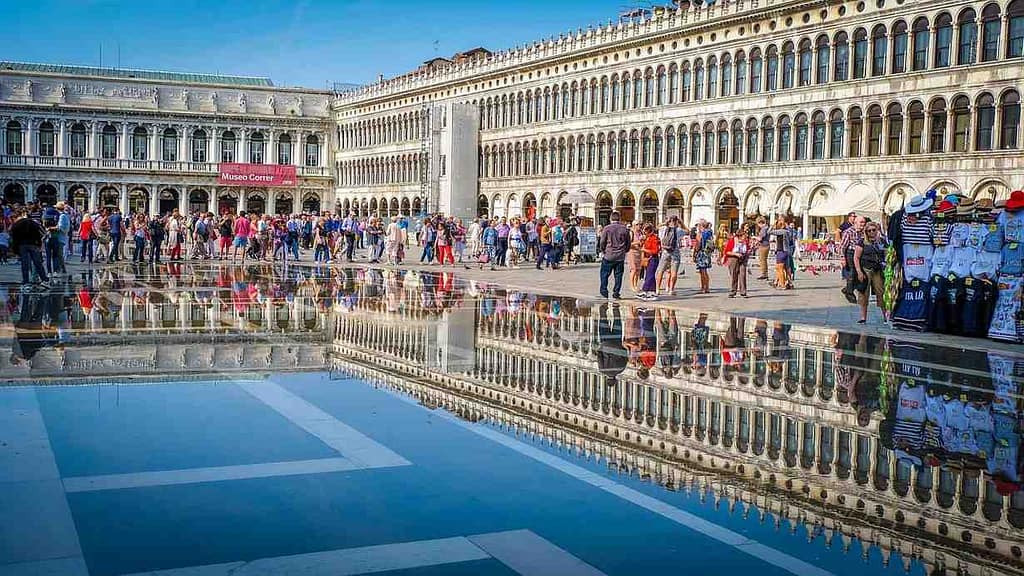
Between October and January, high tides can occasionally flood the lower parts of the city (like St Mark’s Square). The city uses the MOSE barrier system to prevent major flooding, but it is wise to check the tide forecast. If it floods, the city sets up elevated walkways.
4. Dining Etiquette
The “Coperto”: Most restaurants charge a “cover fee” just for sitting down.
Cicchetti: Do as the locals do and go for a cicchetti crawl. These are small, tapas-like snacks served in local wine bars called ‘bari’. Pair them with a Venetian Spritz.
The Grand Canal: Venice’s Main Waterway
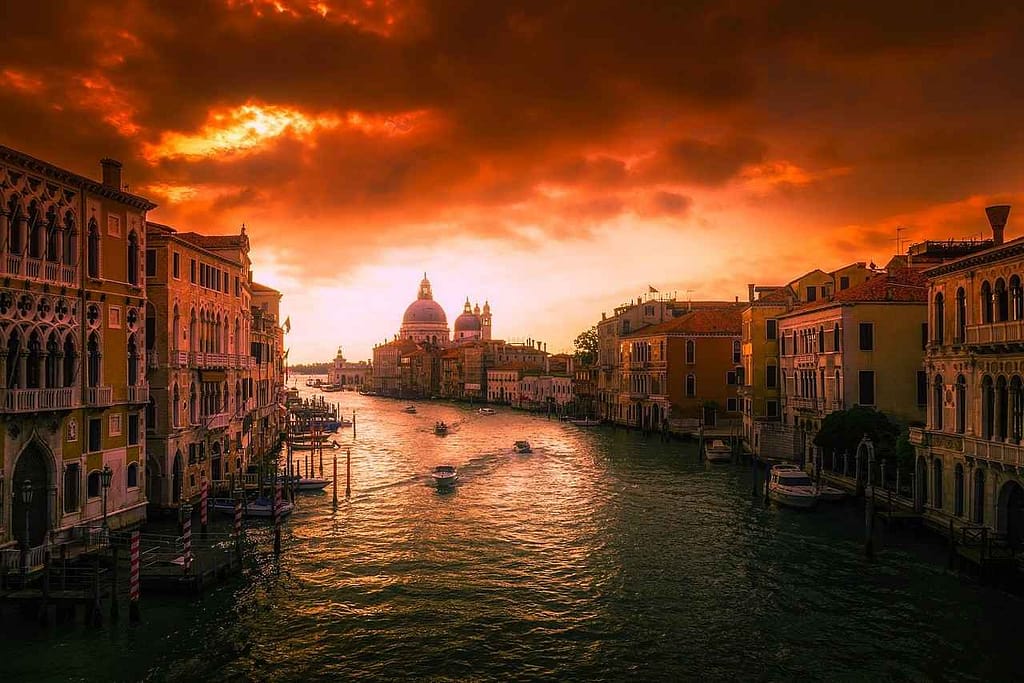
It is often called “The Finest Street in the World”; the Grand Canal is the pulsing heart of Venice. It is a nearly 4-kilometre-long, S-shaped waterway that snakes through the centre of the city, serving as the main artery for all local commerce and travel. Here is what makes the Grand Canal the centrepiece of the Venetian experience.
Architectural Splendor
The canal is lined with over 170 buildings dating from the 13th to the 18th century. These are not just houses; they are Palazzi (palaces) built by wealthy Venetian families to flaunt their riches.
Ca’ Rezzonico: A massive Baroque Palace that now houses a museum dedicated to 18th-century Venice.
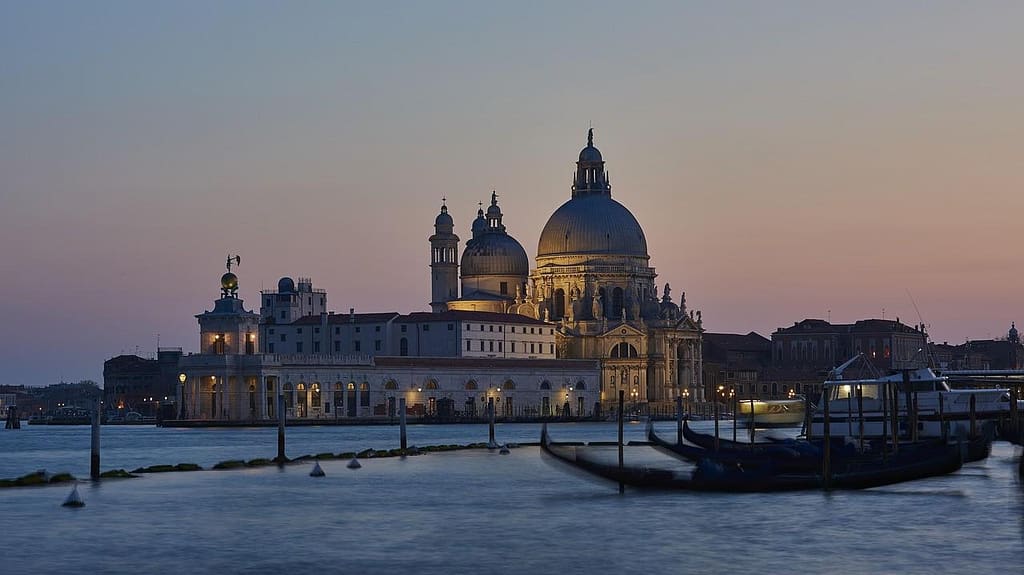
Santa Maria Della Salute: The iconic domed church at the entrance of the Canal, built as an offering for the city’s deliverance from the plague.
The Grand Canal
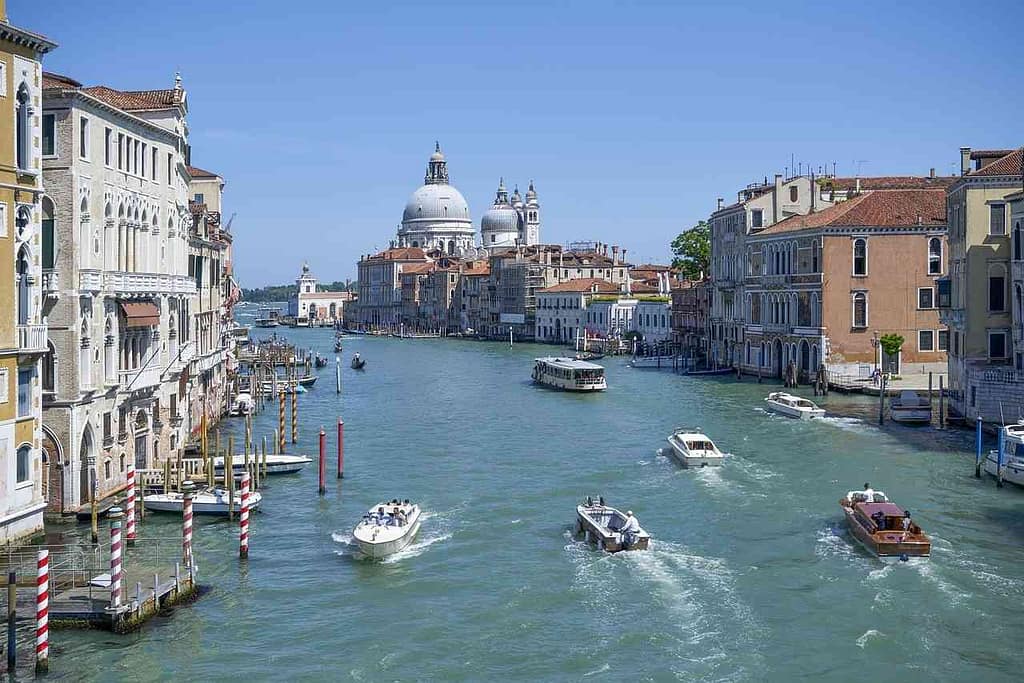
While hundreds of bridges cross the Grand Canal, the smaller the width of the Grand Canal:
1 Rialto Bridge: The oldest and most famous. It’s lined with shops and offers the “postcard” view of the Canal.
2. Academic Bridge: A wooden Bridge offering one of the best sunset views looking toward the Salute church.
Art, Culture, and the Famous Venice Carnival
Venice is a living masterpiece where centuries of history collide with vibrant local traditions. From the gold-leafed corridor of its palaces to the theatrical flair of its festival, the city’s culture is as deep as its lagoon.
The Artistic Soul
Art in Venice is not just in museums; it’s in the architecture. You can find Tintoretto’s dramatic canvases inside the Scuola Grande di San Rocco or seek modern masterpieces by Picasso and Dalí at the Peggy Guggenheim Collection. For music lovers, catching an opera at Teatro La Fenice – one of the world’s most famous opera houses – is a bucket list experience.
The Venice Carnival
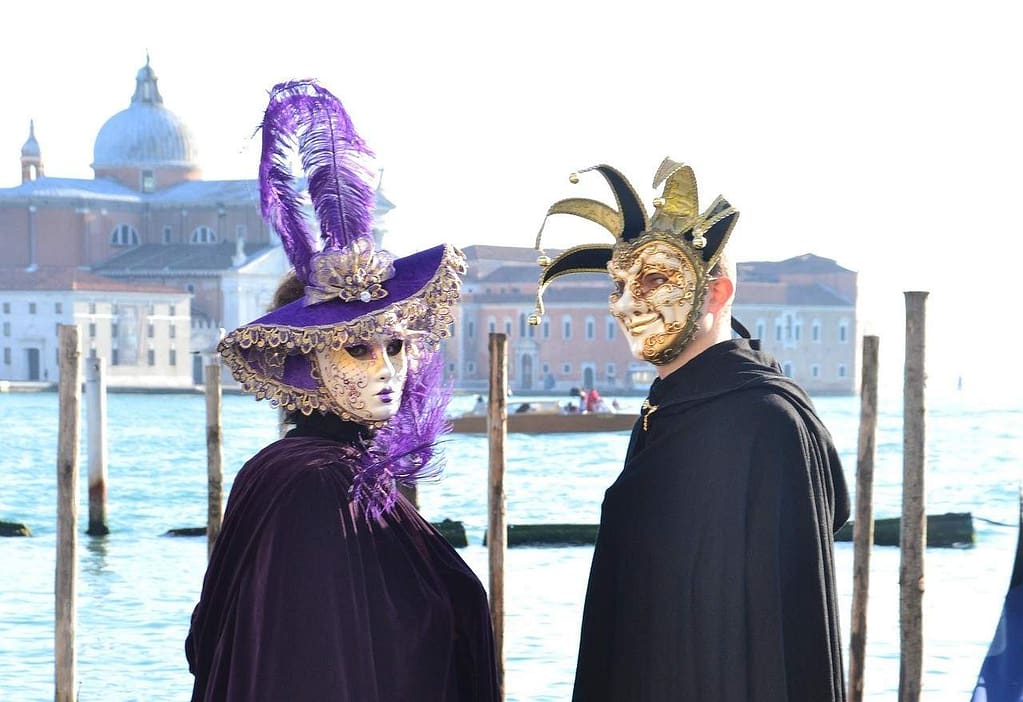
The city truly transforms during the Carnival, which in 2026 runs from January 31 to February 17 .
Traditional Venetian Food and Local Cuisine
Venetian cuisine is a distinct departure from the pizza and pasta typical of southern Italy. Given its history as a maritime republic, the flavours are defined by the Adriatic Sea and the city’s historic role in the spice trade.
The “ Cicchetti” Culture
The quintessential Venetian experience is a crawl through Bacari. You will find cicchetti, small plates similar to Spanish tapas. Locals usually enjoy these with an Ombra (a small glass of local wine ) or a Venetian Spritz made with Select or Aperol.
Must-Try Dishes
Sarde in Saor: Sweet and sour sardine preserved with onion, raisins, and pine nuts – a recipe dating back to the Middle Ages.
Risi e Bisi: More than just ‘rice and peas’, this creamy cross between a soup and a risotto was traditionally served to the Doge on St Mark’s Feast Day.
Bigoli in Salsa: Thick, whole-wheat pasta served in a rich sauce of onion and salt-cured anchovies.
Polenta e Schie: Creamy white polenta topped with tiny, grey lagoon shrimp.
Romantic Gondola Rides in Venice
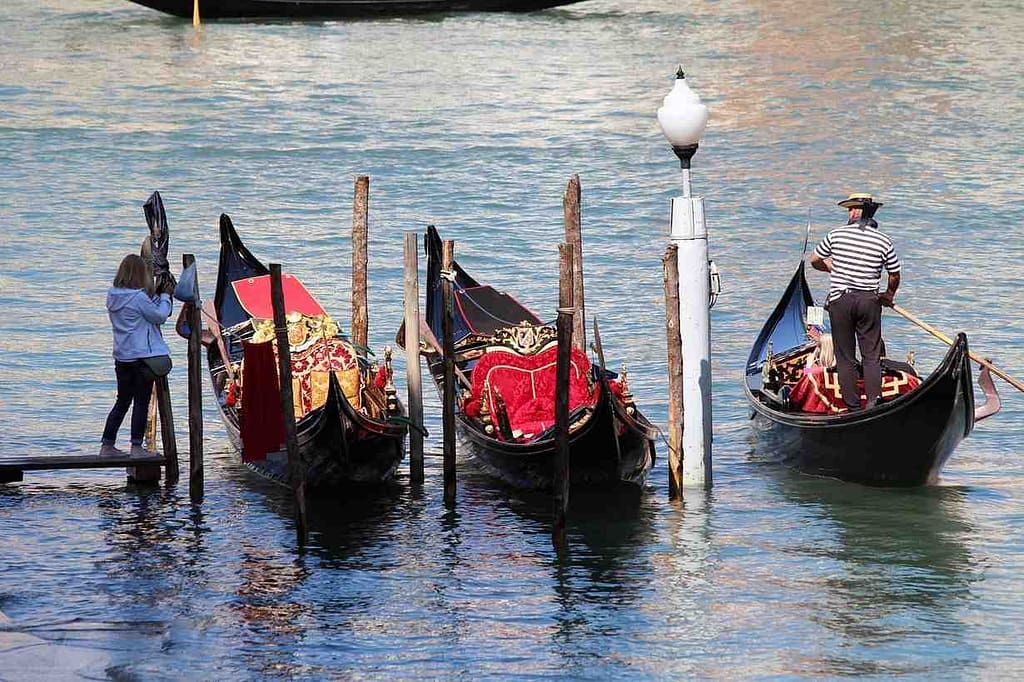
A gondola ride is the quintessential symbol of Venice, offering a perspective of the city that is impossible to gain from its narrow streets.
These slender, black boats have navigated the Venetian lagoon for over a thousand years, evolving into the handcrafted masterpiece seen today.
The Experience
Unlike the high-speed vaporetti, a gondola moves with a rhythmic, silent grace. While the Grand Canal offers grand views of palazzos, the true magic lies in the minor Canal. Here you glide, under low-hanging stone bridges and past the water-level doorstep of ancient homes, hearing only the lapping of the water and the occasional call of the gondolier.
Know Before You Go
Official Rates: Prices are regulated. A standard 30-minute daytime ride costs €90, and after 7:00pm, the price rises to €110. This is a perfect boat.
The Gondolier: Becoming a gondolier is a prestigious, often hereditary profession requiring rigorous training and a licence. While some may sing or provide history, it isn’t a requirement – feel free to ask.
The Best Route: For romance and quiet, start your ride near the San Polo or Cannaregio district rather than the crowded basin near St Mark’s.
Gondola Rides and Romantic Experiences
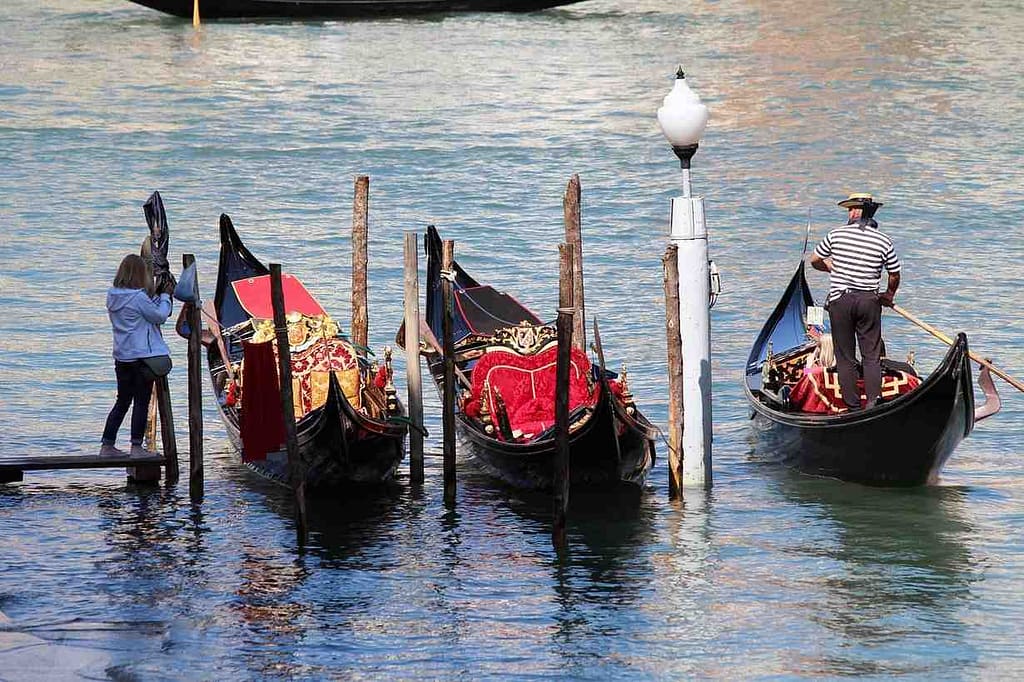
Venice is a place where you can experience love at its finest. There is nothing better than taking a romantic gondola ride while sharing Venice’s famous gondolas. The ride will cost about €90–€110, but it is totally worth it to have a romantic experience to share with someone. Maximum intimacy can be achieved by asking your gondolier to take you on the “silent route” through the narrow, ivy-clad canals in Dorsoduro or San Polo, where there is far less traffic than on the Grand Canal.
Just off of the waterways in Venice, there is an opportunity to share a kiss under the Bridge of Sighs, which is said to give you eternal love according to legend. Another great way to see the beauty of Venice is by strolling down the Zattere along the promenade while watching the sunset or having the opportunity to take a water taxi to the island of San Giorgio Maggiore and see the incredible views of the skyline of Venice at sunset.
Read More – Blog, Destination, Outdoor